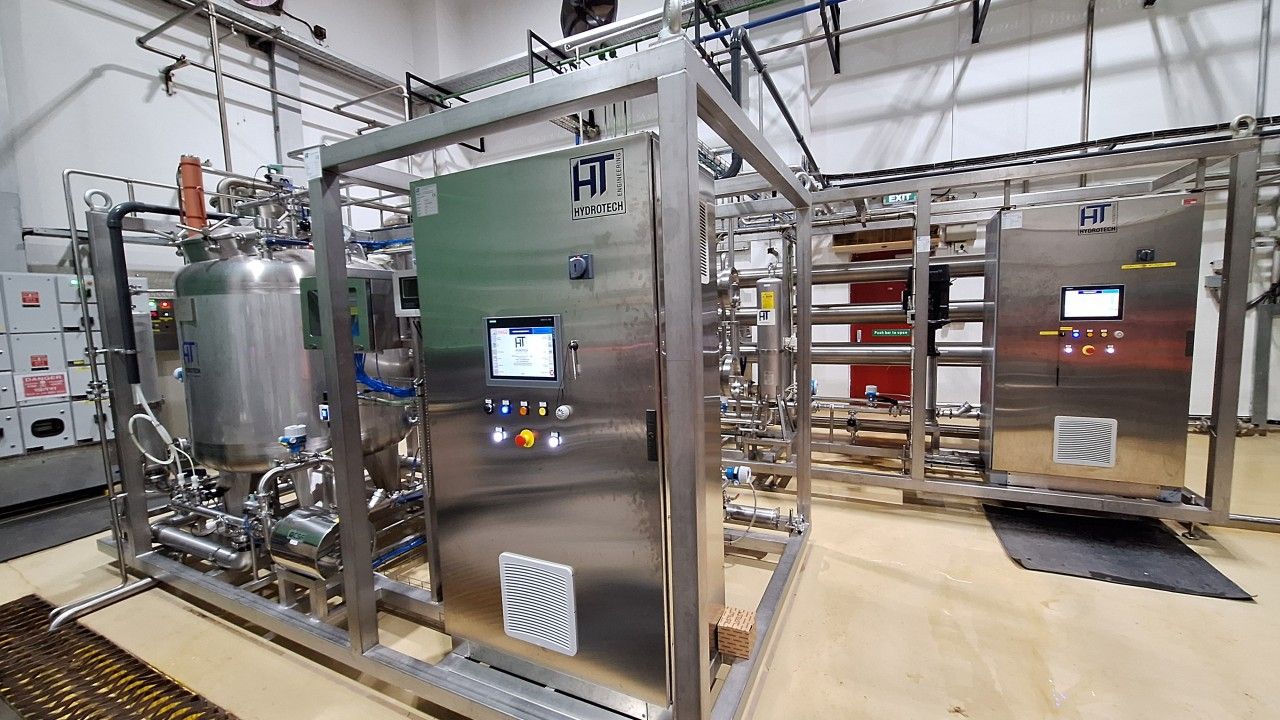
How climate change and water scarcity are revolutionizing Food & Beverage—and why an integrated water management strategy is essential
In the Food & Beverage sector, water is not just a natural resource: it is an ingredient, a solvent, a cleaning medium, a thermal fluid, and one of the main operational cost drivers. Today, however, water has become a critical element in corporate strategies. Water scarcity, more frequent droughts, pollution of water sources, and increasing regulatory pressure are redefining how companies must manage this resource to ensure production continuity and remain competitive.
According to Bluefield’s report “Water for Food & Beverage: Market Trends and Forecasts 2024–2030”, the industry will invest over $112 billion by 2030 in water infrastructure and wastewater treatment. Here’s why.
Water and climate change: a growing risk for the industry
Climate change is accelerating the global water crisis. According to the World Resources Institute, over 25% of the world’s population already lives in areas experiencing extreme water stress, a situation expected to worsen by 2030, threatening agricultural and industrial supply chains. For Food & Beverage companies, this means facing higher costs and reduced availability of both water and raw materials.
When water drives commodity prices up
Water instability is already impacting raw material prices:
-
In 2022, drought in Brazil reduced soybean oil production, pushing prices to $1,666.80 per ton. The demand for biofuels further pressured the market.
-
In 2011, excessive rainfall in Colombia compromised coffee quality, raising prices up to $5.98/kg amid growing demand in China, India, and Brazil.
These examples demonstrate that water scarcity is not merely an environmental issue—it is an economic variable affecting cost stability and supply chain efficiency.
Where water scarcity threatens food production
The most strategic regions for global Food & Beverage production are also among the most vulnerable to water scarcity. Key industry analyses show that countries such as India, China, Egypt, and South Africa are already experiencing severe water stress, exacerbated by climate change and rising demand (Bluefield Research).
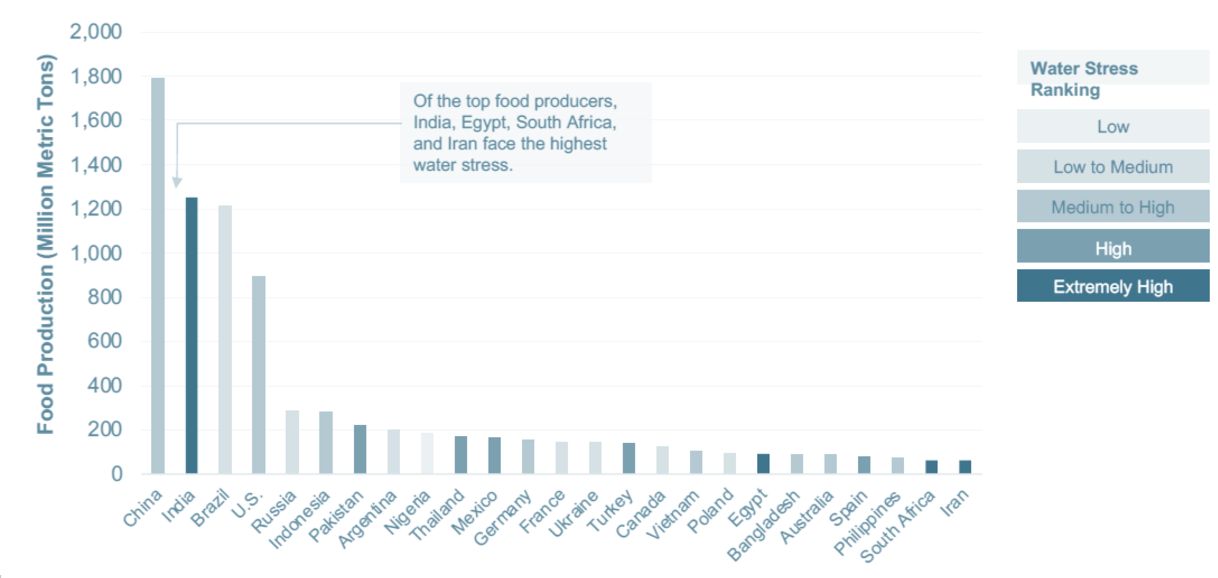
In these areas, supply chain disruptions and rising production costs are already realities. Civil water needs take priority, forcing industries to adapt by sourcing alternatives and implementing advanced treatment and recovery technologies.
Municipal water supplies running low: the need for alternative sources and resilient plants
Currently, 52% of water used in Food & Beverage comes from groundwater, 43% from municipal networks, and only 5% from surface waters. However, local authorities are increasingly restricting industrial use of potable water, prioritizing human consumption, especially in drought-affected regions (Global Water Intelligence).
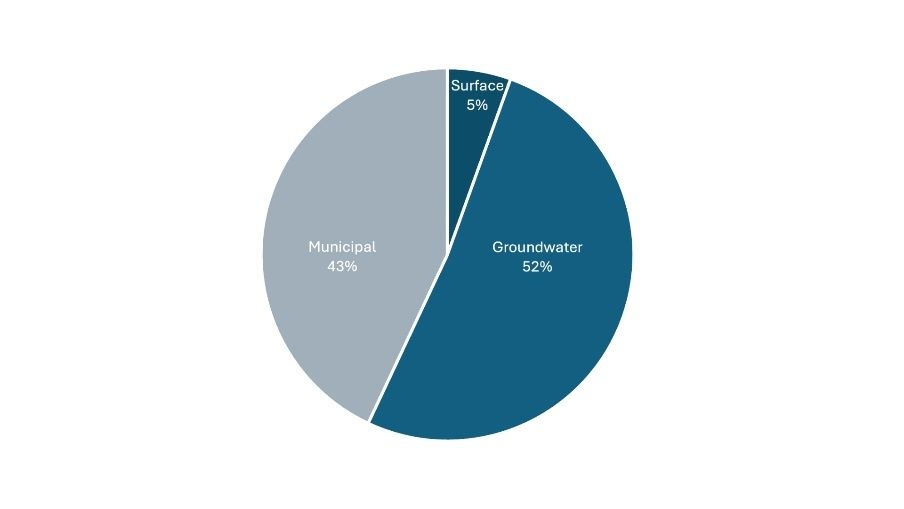
This scenario compels companies to adopt new strategies: tapping into unconventional sources such as deeper aquifers (with higher costs and energy impacts) or surface waters, which are often contaminated with pesticides, heavy metals, and micro-pollutants.
Three major challenges for the F&B sector
-
Scarcity and sustainability: Access to freshwater is increasingly limited, particularly in high-production-density areas such as India, Southeast Asia, Mexico, and North Africa. Municipalities prioritize civil consumption, limiting potable water availability to industries. Companies are thus forced to rely on alternative sources—often more polluted surface and groundwater.
-
Stricter eegulations: In Europe, the USA, and emerging markets, discharge limits and process water quality standards are becoming more stringent. Concurrently, limits on micro-pollutants—such as PFAS, pesticides, and disinfection byproducts—are being integrated into environmental permits.
-
ESG trgets for 2030: Major F&B groups have set ambitious water consumption reduction and reuse targets. Environmental strategies are becoming a competitive lever and a prerequisite for sustainable finance.
New plants must be designed to:
-
Diversify sources: include surface and groundwater, even of more critical quality.
-
Treat more complex waters: design treatment lines ready for higher contamination levels.
-
Maximize reuse: recover and reuse internal water to reduce specific consumption and environmental impact.
A plant that performs well today may no longer be adequate in 5–10 years. The challenge is to anticipate change.
Facing challenges with the right partner
Hydrotech Engineering offers complete, customized solutions for process water treatment, complying with the highest hygienic standards (EHEDG, 1935/2004, 2023/2006/EC, EC10/2011), and for wastewater recovery.
We provide end-to-end solutions covering the entire production facility, from process water treatment to wastewater treatment and recovery, including advanced technologies such as Zero Liquid Discharge (ZLD). This guarantees efficiency, sustainability, and regulatory compliance.
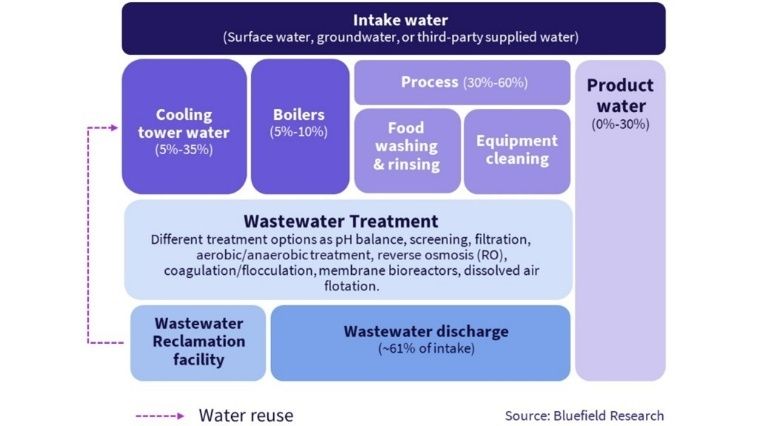
With Hydrotech Engineering, your company will receive solid, tailored technical support to turn water challenges into competitive opportunities.
Hydrotech Engineering technologies supporting your industry
Process Water Treatment – Water Treatment Plant
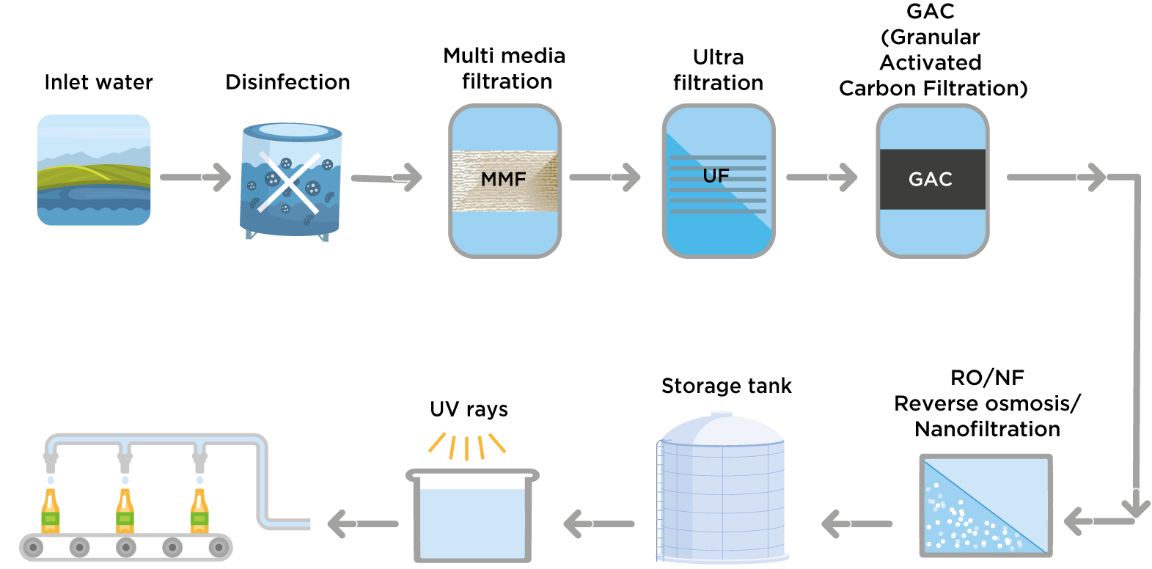
Process water treatment in Food & Beverage requires comprehensive, reliable solutions capable of providing safe water compliant with the strictest hygienic-sanitary standards. Hydrotech Engineering offers systems structured in three main phases, designed to meet the specific needs of each plant.
-
Pre-treatment: Starting with a chemical-bacteriological water analysis to identify the most effective technological combination. Solutions include disinfection (e.g., sodium hypochlorite), multimedia filtration to remove suspended solids and metals (such as iron and manganese), and ultrafiltration (UF) using semipermeable membranes to eliminate bacteria, colloids, and viruses, ensuring high-quality water with low maintenance costs.
-
Main treatment: The core process involves granular activated carbon (GAC) filtration to remove chlorine, pesticides, organic compounds, and substances causing unpleasant odors or tastes. This is combined with reverse osmosis (RO) to remove salts, heavy metals, endotoxins, and antibiotics, ensuring maximum water purity. Alternatively, nanofiltration (NF) may be used for selective removal of ions like calcium and magnesium, reducing hardness and water color.
-
Post-treatment: The final phase uses UV rays to eliminate microorganisms such as bacteria, viruses, and fungi without chemicals and without altering water’s organoleptic properties, ensuring maximum microbiological safety.
With this approach, Hydrotech guarantees production continuity, consistent quality, and regulatory compliance, supporting companies in efficient and sustainable process water management.
Wastewater treatment and recovery – Waste Water Treatment Plant
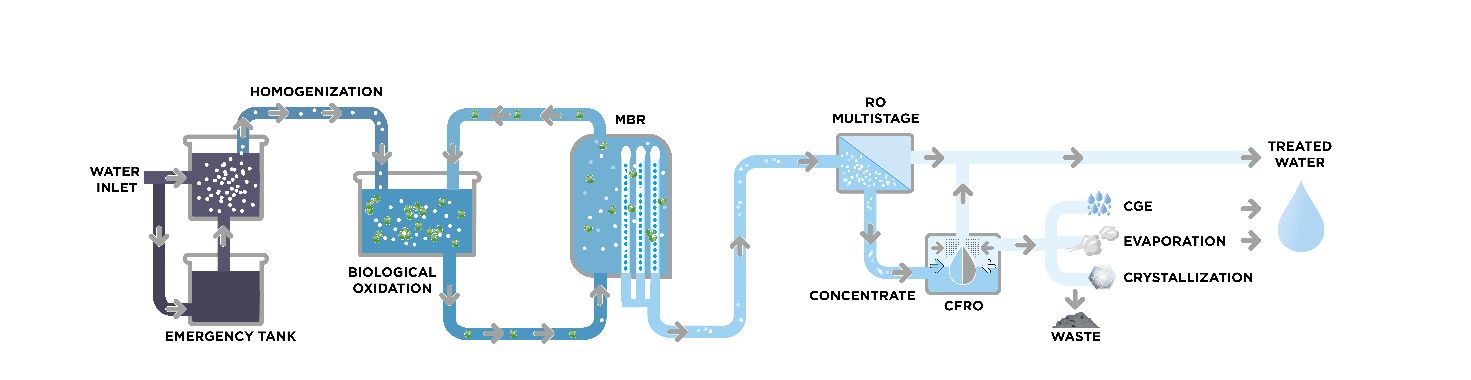
Hydrotech Engineering offers complete solutions for industrial wastewater treatment and recovery, using technologies that maximize water reuse and achieve zero liquid discharge. The process is divided into integrated phases to ensure efficiency, sustainability, and regulatory compliance.
-
Phase 1: Wastewater is collected in a homogenization tank where an aeration system ensures proper oxygenation and prevents odor formation.
-
Phase 2: Biological treatment (MBR – Membrane BioReactor). The system’s heart is the membrane bioreactor combining activated sludge with submerged ultrafiltration. Microorganisms break down organic substances and nutrients (nitrogen and phosphorus), while membranes separate suspended solids, producing clarified, high-quality water. The system efficiently removes hard-to-biodegrade substances with reduced sludge volume.
-
Phase 3: Multistage Reverse Osmosis. Treated water is sent to the RO system, removing microbes, soluble salts, heavy metals, pesticides, and antibiotics, recovering up to 94% of water. The energy-efficient system (~1.5 kWh/m³) guarantees permeate of excellent quality for reuse.
-
Phase 4: Concentrate management. RO concentrate is further treated by technologies like CFRO for managing highly concentrated brines, followed by evaporation (CGE or multiple-effect evaporators). The final crystallization stage produces a stable solid residue, achieving Zero Liquid Discharge (ZLD) and eliminating liquid waste.
With these solutions, Hydrotech Engineering helps companies turn an environmental challenge into a resource, ensuring production continuity, sustainability, and reduced water procurement costs.
Want to discover how to turn water management into a concrete competitive advantage?
Read our case study on a plant implemented for one of the world’s leading beverage producers in Cameroon.
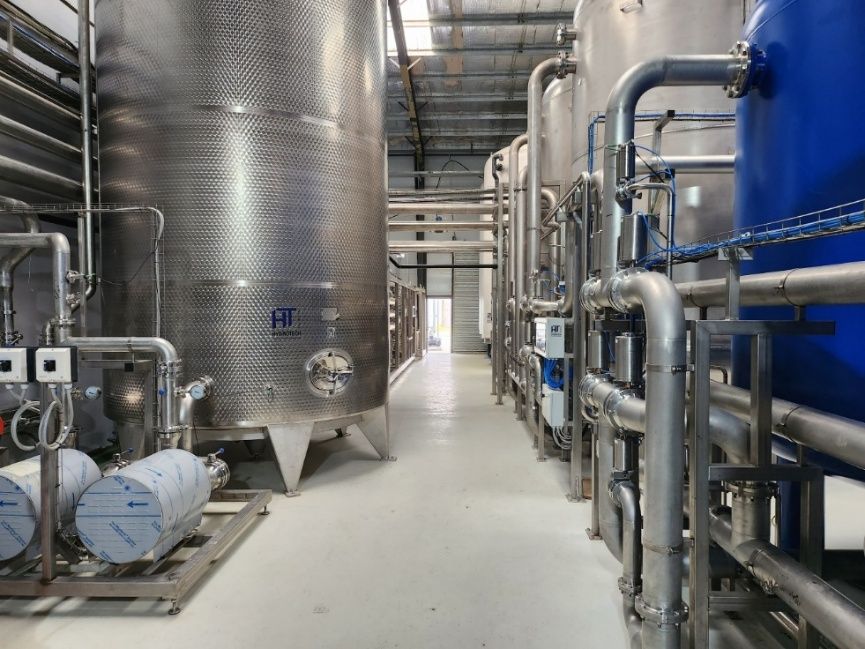
Explore the full case study here.
Water management is no longer just an operational matter: it is a strategic driver of competitiveness in the Food & Beverage sector. Companies investing today in resilient, efficient solutions will be the only ones capable of successfully facing the challenges posed by water scarcity, climate change, and increasingly stringent regulations.
According to Bluefield Research, over $112 billion will be invested by 2030 in technologies for water treatment, reuse, and digital water management. The time to act is now.
With partners like Hydrotech Engineering, companies can not only adapt to new scenarios but seize the opportunity to turn vulnerability into innovation, sustainability, and growth. Water will be the most critical resource of the future—but also the one that can make all the difference.
Would you like to get in touch with an expert? Fill out the form here, and a member of the Hydrotech Engineering team will contact you shortly.